
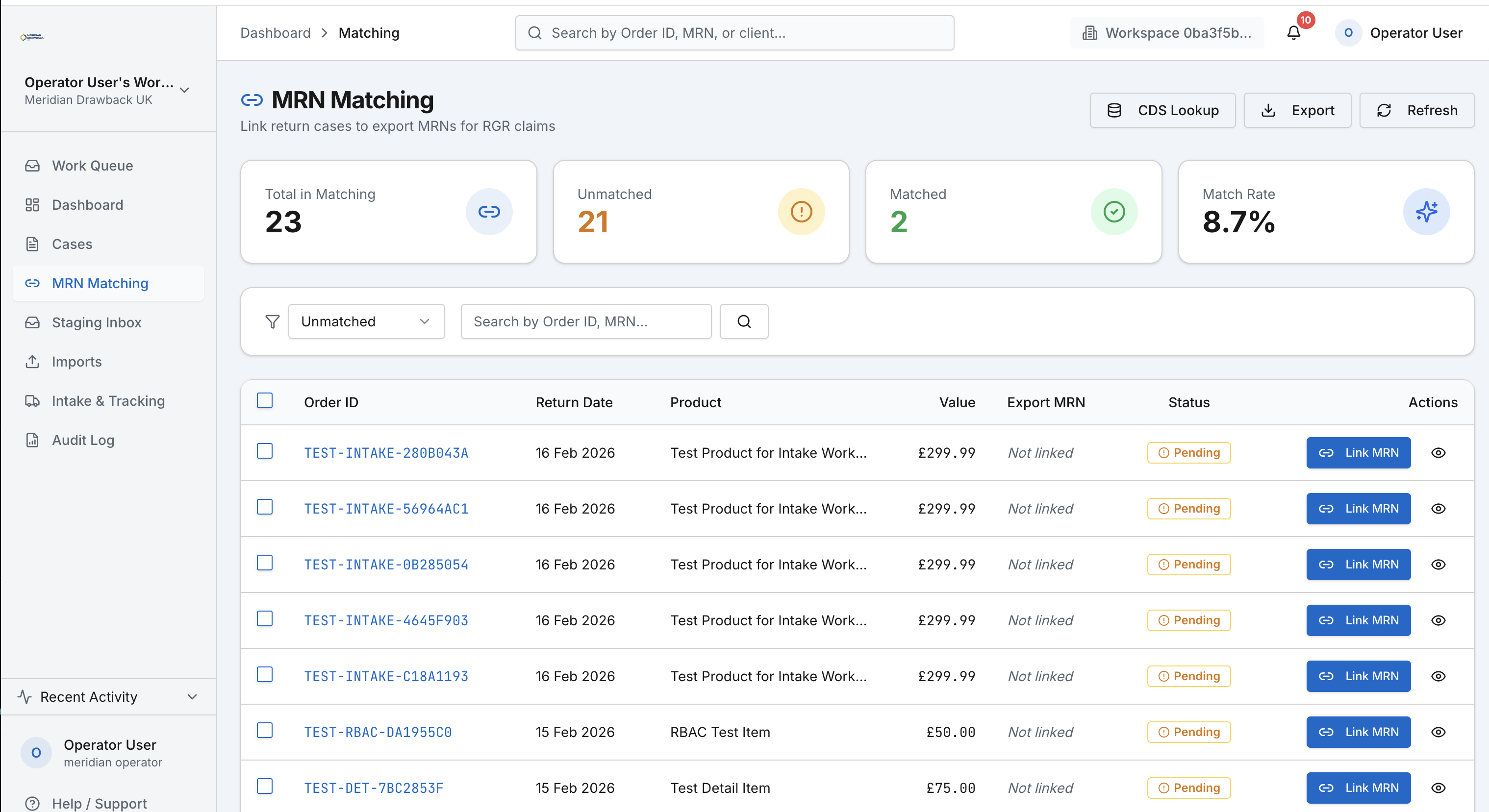
The Movement Reference Number (MRN) is the single most important data point in any RGR or Drawback claim. It is the reference that links a returned or re-exported item back to the original export declaration. Without it, HMRC cannot verify that the goods left the UK in the first place, and without that verification, the claim fails.
Why MRN matching is so hard
The core problem is that returns data and export data live in completely different systems, managed by different teams, with different reference formats. Linking them manually is tedious, error-prone, and scales terribly.
- Returns data lives in your returns management system or e-commerce platform
- Export declarations live in HMRC's Customs Declaration Service (CDS)
- Order IDs do not always map directly to export references
- Tracking numbers get lost or reused across shipments
- Shipment references are incomplete, especially when multiple forwarders are involved
- Batch exports may contain multiple orders under a single MRN
This is why most retailers never claim RGR. The manual work feels impossible. The risk of getting it wrong feels too high. And the payoff feels uncertain when you do not know how many returns are actually matchable.
For a full overview of RGR eligibility and the returns lane process, see our guide on Returned Goods Relief explained.
How Meridian solves the matching problem
The Meridian Compliance Engine uses an intelligent, multi-layer matching algorithm that processes hundreds of returns in minutes. Each layer adds a different matching strategy, and cases that cannot be resolved automatically are routed to a structured exception queue rather than being abandoned.
The primary match. We link the return order ID to the original sales order, then search for an export MRN within the expected shipment date window. This catches the majority of straightforward cases.
Where order ID matching is ambiguous, we use the outbound tracking number to locate the export declaration. This is particularly useful for consolidated shipments where multiple orders share a carrier consignment.
The fallback layer. We use shipment references, carrier manifests, and freight forwarder data to locate the export MRN when order-level and tracking-level matches fail.
Cases that cannot be matched through any automated layer are routed to a structured exception queue for manual review. This ensures no eligible return is abandoned. It is either matched or documented as unresolvable with a clear reason.
What this means for retailers
- Proof of export in your hands, not stuck in a spreadsheet
- Confidence that your claim will pass HMRC scrutiny
- Recovery timelines measured in weeks, not months
- Clear visibility on match rates and exception volumes
What this means for 3PLs
- Faster turnaround on duty recovery claims across multiple clients
- Fewer manual data entry errors
- Scalable matching that grows with your client base
- More time spent on value-add services, not data wrangling
Data quality is the real unlock
Automated matching only works when the underlying data is clean. Missing order IDs, inconsistent date formats, and incomplete tracking references all reduce match rates. Meridian runs a data readiness assessment as part of onboarding to identify and fix these gaps before any claims are filed. The result is a continuously improving match rate that increases the percentage of returns eligible for relief.
Once matched, the evidence pack is the next critical step. Learn what HMRC expects in Evidence Packs: What HMRC Expects.
Want to see the matching engine in action?
Talk to a specialist and we will show you how we link returns to exports at scale.